Purpose of Fire Detection and Alarm Systems
Fire detection systems and fire alarm systems are mandatory safety infrastructures designed to detect fires at their earliest stage in facilities, businesses and buildings. Within the framework of a defined fire protection strategy, these systems notify occupants, automatically activate mechanical and electronic devices to limit the spread of fire and smoke and support safe evacuation.
Designed according to the Turkish Regulation on the Protection of Buildings from Fire and the TS CEN/TS EN54-14 fire detection design guideline, these systems aim to minimise the risk of casualties and material damage by providing timely information to the fire brigade, security staff and relevant operational teams.
Risk Analysis and Fire Protection Strategy
Fire detection systems are planned within the scope of a fire protection strategy that evaluates the risk class of the building, occupant load factor, operational processes, patterns of use, safe evacuation time and similar criteria. Based on this analysis, detector types, zoning structure, alarm scenarios and control functions are defined.
In high-rise buildings, factories, business centres, hospitals and other high-occupancy structures, the need and level of integration between fire detection systems and other safety and control systems (building automation, smoke extraction, elevator control, public address, etc.) are increasing day by day, requiring a holistic design approach.
Addressable Fire Detection Systems and Integration
In medium and large-scale projects, addressable fire detection system solutions are preferred, as they enable point identification of devices on the loop and targeted intervention at address level. These systems make it possible to quickly locate the origin of the fire, reduce false alarms and manage evacuation scenarios in a more controlled manner.
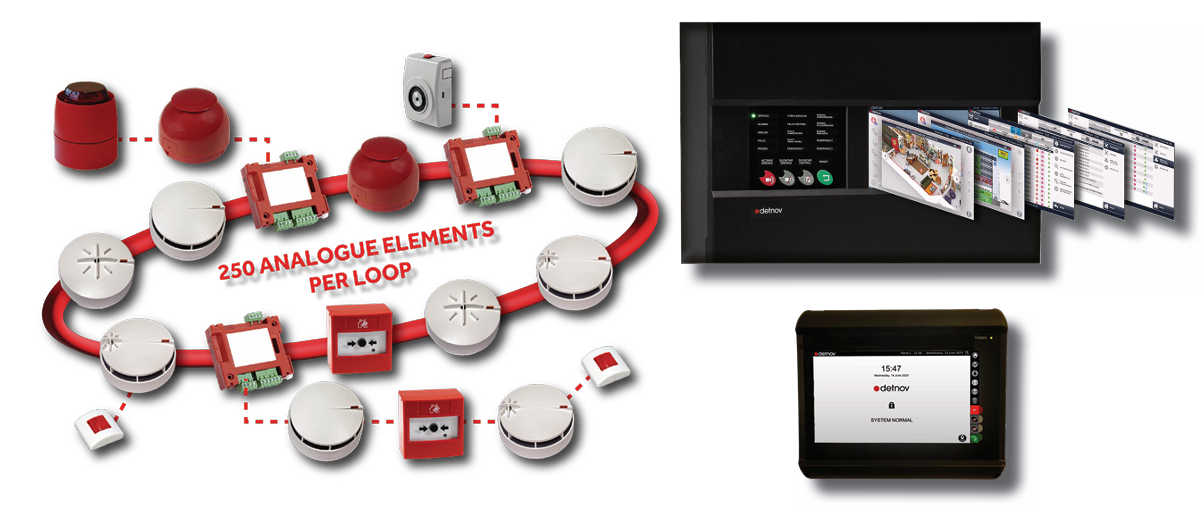
Addressable control panels work together with smoke and heat detectors, manual call points, modules and field devices, and are integrated with smoke extraction fans, fire dampers, elevators, door magnets and other fire alarm systems. In the event of a fire, all connected systems can be activated in a coordinated, scenario-based manner.
Standards, Regulations and Certification Requirements
For buildings with different uses and risk profiles, the Turkish Regulation on the Protection of Buildings from Fire and the standards referenced in the regulation define specific requirements that must be followed. For projects abroad, additional standards such as NFPA, GOST, BIS and others may apply depending on the local regulations.
In system design, EN54-14 and related EN54 series standards accepted by TSE in Türkiye are used, while for international projects references such as NFPA, GOST and BIS are considered. In addition, various certifications (EN54, UL, FM, etc.) are required for the products used. Therefore, correct system architecture and product selection are critical in terms of legal liability, insurance processes and overall system reliability.
Correct System Selection and Project Consultancy
The type of building, risk class, intended use, size and architectural layout are the main criteria in determining the system we will propose for you. For different building types such as factories, hospitals, office buildings, shopping centres, hotels or logistics facilities, detector technologies, zoning strategies and integration levels may vary.
As Matriks, we design and supply systems that comply with local and international standards, fully meet fire brigade and municipal authority requirements and offer a scalable, flexible architecture. Within this scope, we provide fire detection system design and consultancy services, supporting you throughout all phases from initial feasibility to commissioning.
Critical Importance for Life and Property Safety
Designing fire detection systems in compliance with regulations and standards, implementing them with suitable products and ensuring regular testing and maintenance are vital requirements for safeguarding life and property in your buildings.
Poorly designed or incomplete infrastructures can jeopardise business continuity and lead to serious consequences in terms of legal responsibilities and insurance processes. For this reason, when planning fire alarm systems, regulations, risk analysis and long-term operational needs must be addressed as an integrated whole.