Definition of IP CCTV and Closed-Circuit Television Systems
A closed-circuit television system (CCTV) is an abbreviation of the English term “Close Circuit Television” and refers to a camera system in which images captured by cameras installed in specific areas are transmitted over a closed infrastructure that is not publicly accessible and can only be viewed by authorised users.
Unlike traditional television broadcasting, IP CCTV systems provide a controlled and manageable monitoring infrastructure used primarily for security and supervision, rather than for public broadcasting.
IP Camera Systems, Video Monitoring and Recording Infrastructure
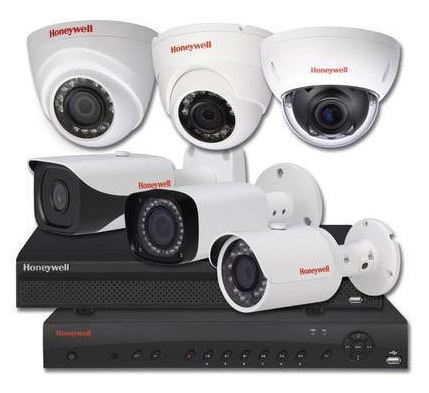
IP camera systems are modern CCTV solutions that transmit video and audio data digitally over the network. This enables high-resolution images, flexible recording options and access from different locations.
Through installed video monitoring and recording systems, public institutions, banks, large factories, hospitals, retail stores and similar facilities can conduct both live monitoring and post-incident investigations in a secure and traceable way. Recording devices (NVR/DVR), storage units and monitoring workstations form the core components of the system.
Intelligent Video Analytics Systems and Integrated Security
With technological advancements, IP CCTV systems are no longer limited to displaying and recording video. Intelligent video analytics systems can generate alarms without the need for operator intervention and automatically handle scenarios such as people counting, licence plate recognition, intelligent traffic analysis, perimeter violation, suspicious object detection and crowd analysis.
These intelligent functions can be integrated with card access, barrier, turnstile, fire detection and building automation systems, enabling event-based automatic actions and significantly increasing the overall security level.
Use Cases and Application Scenarios
IP camera systems and video control infrastructures are widely used in public institutions, banks, industrial plants, healthcare facilities, educational institutions, shopping malls and retail environments. Project-specific designs are created by considering camera placement, resolution, field of view and retention time requirements for each type of area.
Different camera types (dome, bullet, PTZ, etc.) and lens options are selected for entrances and exits, car parks, critical production zones, cash desks and storage areas, emergency exits and common-use spaces, thereby supporting both security and operational monitoring processes.
Matriks Approach and Scalable Architecture
As Matriks Building Control Systems, we continuously follow technological developments and design IP CCTV systems that fully address our customers’ needs and expectations, offering easy management and scalable architectures.
Thanks to flexible designs, a system initially deployed with a limited number of cameras can be expanded by adding new cameras, servers or storage units as needed. This approach optimises initial investment costs while building a long-term security infrastructure aligned with your operational strategies.
Easy Management, Reporting and Integration
With user-friendly video management software, all video monitoring and recording systems can be managed through a single interface. Live view, playback, incident search, user authorisation, alarm handling and reporting functions reduce operator workload and shorten response times.
Through integration with other security and automation systems, video recording and event tagging can be triggered in parallel with card reads, alarms, sensor activations or operational scenarios, thereby strengthening the traceability of all critical processes across the site.