
Building Automation Management: Smart Building Systems and Integrated Building Management
-
17 September 2020
Today, rising energy costs, increasing labour expenses and growing sustainability requirements make the use of a professional building automation system a necessity rather than a choice. By bringing HVAC automation, lighting control, energy metering and monitoring, security and life-safety solutions together under one roof, a modern building management system (BMS) becomes the backbone of the smart building approach, enhancing both comfort and operational efficiency.
When correctly designed, smart building systems integrate HVAC automation, energy automation, lighting automation, fire detection, voice evacuation, CCTV, access control and CO detection, delivering maximum comfort with minimum energy consumption. Supported by a central building management system and a robust energy monitoring system, these integrated solutions provide significant advantages in operational continuity, energy savings, reporting and remote monitoring for building owners and facility managers.
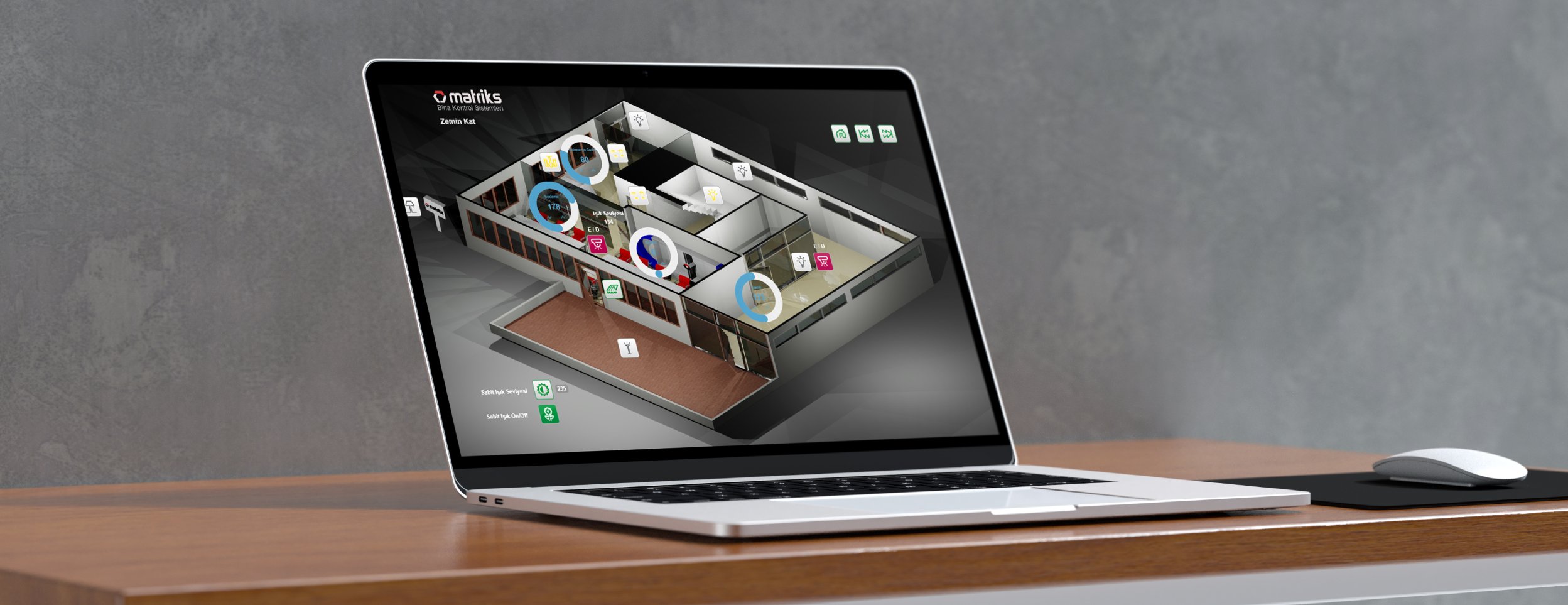
Building Automation
What Is Building Automation Management?
The living standards of our century, combined with rapidly developing technology, bring along increasing energy costs, higher labour expenses, environmental pollution, budget inconsistencies and many factors that negatively affect human health. For this reason, making buildings more efficient, safer and more comfortable through the correct use of technology is no longer a preference but a necessity. At this point, building automation system solutions come into play, enabling low-voltage and mechanical systems to be managed from a single centre and making the smart building concept a reality.
Integrated smart building systems are collections of systems that simplify human life and improve both comfort and operating economy in the buildings where we live and work. However, to achieve these benefits, proper system design, correct product selection and professional commissioning are critical. Otherwise, poorly designed or incorrectly implemented automation architectures can result in confusion, excessive energy consumption, lack of comfort and even health impacts.
Core Components of Smart Building Systems
A modern building management system (BMS) is typically built around the following core components:
- HVAC (Heating, Ventilation, Air Conditioning) heating–cooling mechanical automation system
- Energy automation and energy monitoring system (metering, sub-metering and billing)
- Lighting automation (lighting efficiency via KNX, EIB, DALI and similar protocols)
- Fire detection and fire alarm system
- Emergency public address and voice evacuation systems
- CCTV closed-circuit camera systems
- Card access and access control systems
- CO detection and car park ventilation control systems
HVAC Automation and Building Management System Integration
HVAC automation is one of the most critical parts of a modern building automation system architecture. In our projects, we use the new-generation Smart StruxureWare building management system (BMS) platform from Schneider Electric for HVAC heating–cooling mechanical automation, often referred to as BMS/BOS. With its graphical interface, data flow and data control capabilities, user-friendly design and upper-level integration options, the platform provides a strong management backbone for operators.
Through this central platform, both packaged mechanical units and field devices are connected to the system via I/O units and DDC (Direct Digital Controller) devices. Chillers, exhaust fans, air handling units (AHU), boilers, heat pumps, VRV systems, heat recovery units (HRU) and jet fans communicate over open protocols such as BACnet, Modbus and LON on a native network. Because the structure is based on native networking, communication can be provided directly without the need for additional gateways. In our reference projects, this architecture has been refined through experience to a “plug and play” level, significantly reducing commissioning time.
Energy Automation and the Energy Monitoring System
Energy automation and an effective energy monitoring system have now become almost standard for realistically calculating the costs of electricity, water, steam, solar, wind, gas and similar utilities in a building. In the context of increasing energy prices, environmental concerns and sustainability goals, energy management has become an indispensable topic for modern facilities.
An energy automation system offers modular functions such as detecting losses, efficiency analysis, real-time and historical monitoring, cost allocation and billing. Through the building management system, facility managers can see how much energy is consumed on which line and at what time, and can adjust operating strategies accordingly. As a result, energy savings targets are actively supported by data-driven decisions rather than rough estimations.
Lighting Automation and Smart Building Systems
Lighting automation was initially applied purely for comfort, but today it plays a strategic role in reducing operating costs and improving energy efficiency. Energy legislation and related regulations encourage the use of lighting control in buildings and accelerate the transition to smart building systems.
Lighting automation can be implemented through on/off or proportional (dimming) control. Architectures built on KNX, EIB, DALI, DMX and similar protocols can easily integrate with other automation systems. In this way, the building automation system can support functions such as daylight-based dimming, scenario-based lighting, automatic switching off outside working hours and time-schedule-based control, thereby improving both user comfort and energy performance.
Fire Detection, Voice Evacuation, CCTV and Access Control
In the fire detection system, we implement interactive addressable solutions from Detnov (Spain) and Detectomat (Germany), for which we are the distributor in Türkiye. Compared to many alternatives, our interactive systems offer a more modular and flexible architecture, longer loop lengths, more devices per loop and polarity-free wiring, all of which shorten commissioning time while increasing integration capability. Thanks to onboard Modbus communication support, the system is suitable for horizontal, vertical and top-level integrations.
In full compliance with the Turkish Fire Protection Regulation and EN54 standards, mechanical equipment such as pressurisation fans, smoke extraction fans and fire dampers can be operated in an override mode and fully integrated way. In parallel, emergency public address systems provide automatic zone-based fire announcements and manual announcements at predefined points, forming the life-safety side of the solution. IP-based CCTV video management systems and card access systems can also be integrated under the same building management system, enabling holistic management of building security scenarios.
CO Detection and Car Park Ventilation Control
In underground and enclosed car parks, CO detection and control systems monitor carbon monoxide levels and activate ventilation fans in stages, keeping air quality within safe limits. Detnov CO detection and control systems can easily be adapted to different projects, thanks to three-stage relay outputs per zone, 0–10 V analogue outputs per zone and Modbus IP communication. This not only enhances occupant safety, but also prevents unnecessary fan operation and optimises energy consumption.
StruxureWare as an Integrated Building Management Platform
The StruxureWare platform is a next-generation SCADA-based building management system for centralised control and event management. With advanced animated graphics, detailed reporting, trend analysis and native network control, it brings together lighting automation, energy automation, HVAC automation, fire and security systems, and audio/visual systems on a single platform. Users can access the system via touch panels, tablets, smartphones or PCs, monitoring and controlling the building in real time.
High-performance solutions built on StruxureWare offer the following advantages:
- Eliminates the need for separate interfaces and software for each system, providing both cost savings and full integration.
- Centralised energy management enables higher energy savings and shorter payback periods.
- Operating scenarios and requested functions can be adapted through software revisions without additional hardware costs.
- Since third-party interface hardware and software are not required for integration, version changes have minimal impact on the overall system.
The Role of Matriks in Building Automation Projects
Matriks, with more than 20 years of experience and an innovative approach, provides end-to-end solutions in building automation system and smart building systems projects. From design to implementation, from system training to service and maintenance, all phases are managed in a coordinated way by Matriks. Thanks to proven upper-level integration solutions and extensive field experience, projects are designed not only to meet today’s needs but also to support future expansion scenarios.
The main services provided by Matriks in its projects include:
- Preparation of detailed implementation projects
- System optimisation and value engineering
- Engineering studies for rapid adaptation to sector innovations
- Transferring experience from similar projects to ensure sustainable life-safety, asset protection and comfort conditions
- Defining the measures required for energy efficiency
- Preparing emergency control functions and cause & effect matrices in line with local and international standards
- Coordination of disciplines related to low-voltage and automation systems
- Providing spare parts from stock and fast service support to maintain business continuity
- Delivering fast and cost-effective service and maintenance through an extensive network of solution partners across Türkiye